


Solar energy explained
The sun's energy is a free and clean form of renewable energy that can be used to generate electricity using solar panels. Installing solar panels will enable you to generate your own electricity, reduce your power bill and reduce greenhouse gases.
How does solar work?
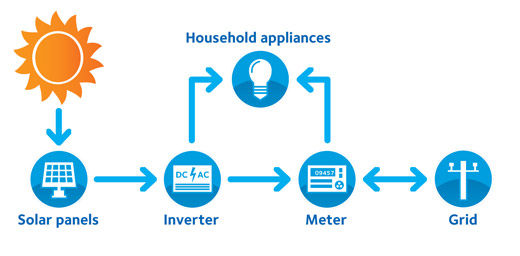
- Solar panels: When the sun's shining, solar panels capture sunlight and convert it into solar direct current (DC) electricity
- Inverter: The inverter converts this power into 240V AC electricity that's used by your appliances. Any excess is exported to the grid
- Household appliances: Your house uses electricity from either your solar panels (when they're generating power) or the grid (when they're not)
- Meter: Your solar meter only reads the energy produced over the amount your house uses
- Grid: Any electricity not used is fed into the electricity grid through your electricity meter. When you're consuming more than you produce you draw electricity from the grid
Frequently asked questions
-
How do I connect my solar system?
Do you want to connect a solar system or upgrade an existing one? Find out how to connect embedded generation to the Tasmanian electricity network.
-
What happens to my solar during a power outage?
For your safety, your solar system will automatically cut out during a power outage on the grid your system is connected to.
Check to ensure your solar system turns back on after planned or unplanned power outages. Not all solar inverters will switch back on automatically after a power outage.
-
What's a solar feed-in tariff?
A feed-in tariff (FiT) is a rate of payment made by an energy retailer to a customer who "feeds" electricity back into the grid. Any enquiries you have about these prices need to be directed to your energy retailer.
-
What if I want to install a system larger than 10kW per phase?
Customers with installations larger than 10kW will need to negotiate their feed-in tariff or power purchase arrangements directly with their energy retailer. They'll also require approval from us to connect to the distribution network.
-
Who's responsible for switching on my system after my new meter's installed?
Your accredited installer will switch on your system.