




After a power outage
It’s important to take a few key steps to ensure safety and put your home back in order.
When the power is back on
After a power outage, getting the power back on doesn’t always mean everything is back to normal straight away. Taking things slowly and checking both inside and outside your home can help make sure everything is safe before you go back to your usual routine.
- Inspect your home for any damage caused during the outage, especially after severe weather (e.g. fallen branches, water leaks), and make sure it's safe to stay.
- Restock emergency supplies you may have used during the outage (e.g. batteries, water, non-perishable food).
- Recharge essential devices such as phones, batteries, and medical equipment.
- Check refrigerated and frozen food for spoilage and discard anything unsafe. Learn more about food safety on the Food Safety Information Council website.
- If you have solar panels, check your solar system has been restored after any planned or unplanned outage. Not all solar inverters switch back on automatically.
- Reset clocks, alarms, and electronic devices that may have lost their settings.
After sever weather events
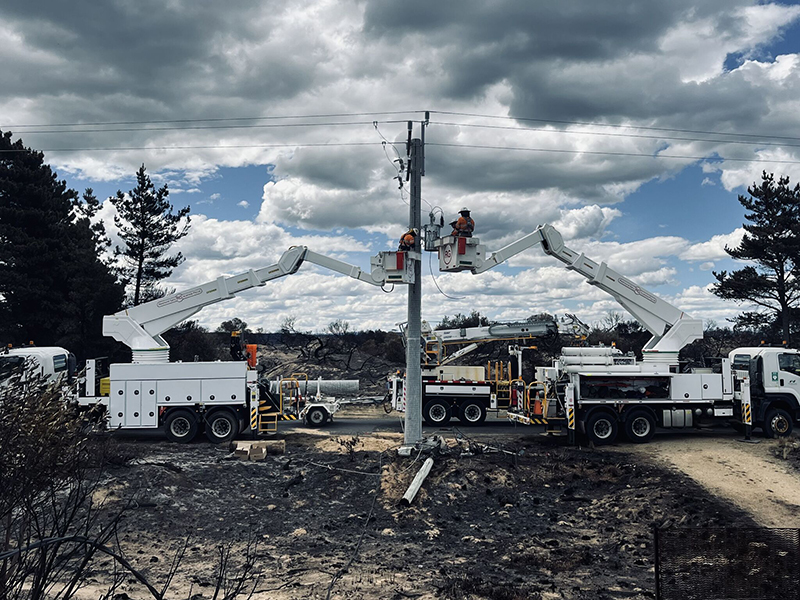
Severe weather can cause significant damage to the electricity network, resulting in power outages, fallen powerlines and hazardous conditions across homes and communities. Even after the weather has passed, dangers can remain.
If your area has been affected by severe weather, stay alert and take extra care around damaged electrical infrastructure. Fallen powerlines, damaged poles and vegetation in contact with powerlines can all pose a serious risk.
Always assume fallen powerlines are live and don’t approach them. Stay at least 10 metres away from fallen powerlines or anything touching them. Report fallen or damaged powerlines to us on 132 004.
-
After a bushfire
If your home or property has been impacted by fire (including by embers and ash), your electrical wiring, circuit breakers and fuses will need to be confirmed safe by an electrical contractor. Don't plug in or use appliances or equipment that may have been damaged by fire until they've been checked by an electrician.
Have your home inspected by an electricical contractor and repairs carried out before contacting us to have power restored. For safety purposes, an electrician will have to provide us with a Certificate of Electrical Compliance before reconnection if you’ve been disconnected.
On Total Fire Ban days
For everyone’s safety, on Total Fire Ban days we take extra precautions when operating the electricity network. These precautions include altering our processes to ensure power doesn’t automatically restore following a fault. As this process involves a physical inspection of powerlines, it may take a longer for power outages to be restored.
We understand no one likes power outages and longer restoration times may be frustrating. However, the safety of our people and our communities are our number one priority and this process is an important part of reducing the risk of fire.
-
After a storm or a flood
If your home/shed has been affected by flooding, your wiring, circuit breakers, fuses and appliances will need to be safety checked by an electrician and ensure repairs are carried out before contacting us to have power restored. For safety purposes, an electrician will have to provide us with a Certificate of Electrical Compliance before reconnection if you've been disconnected.
Don’t swim in flooded creeks and drains as they could hide fallen powerlines. If parts of the electricity network or fallen powerlines are covered in floodwater, stay as far away as possible as water conducts electricity.
If you experience flickering lights or receive a shock or tingling sensation from any electrical appliances, plumbing, metal, sink or bath, avoid all contact with the appliance or metallic fixtures in question. Call us on 132 004 to report the problem as soon as you can.
Frequently asked questions
-
What if I wasn't notified about a planned power outage?
Whenever planned outages are scheduled we’ll give you at least 4 business days’ written notice so you can make alternative arrangements. Affected customers will be notified via mail and SMS for those who have a mobile number listed with their retailer.
We're required to advise all customers about planned power outages. If you believe you weren't notified please call us on 1300 137 008 or send us an enquiry.
-
Will I be compensated for my power going out?
Planned power outages
Compensation is not provided if we’ve notified you of the planned outage. If you believe you weren’t notified please call us on 1300 137 008 or send us an enquiry.
Unplanned power outages
You may be entitled to a Guaranteed Service Level (GSL) Scheme payment from us if your power supply doesn't meet certain supply standards. These payments are made automatically; you don't need to do a thing. Find out more about our power supply guarantee.
You may be eligible for compensation for loss or damage following an unplanned power outage. If you’ve experienced loss or damage following an unplanned power outage you can make a claim for compensation. However, please keep in mind events that are outside of our control, such as severe weather, accidents, third party damage and vandalism are not subject to compensation.
Explore more power outage information

Prepare for power outages
While most outages are temporary, they can disrupt daily life and pose safety risks if you’re not prepared.

During a power outage
Learn what to do during a power outage to keep yourself and your household safe.

Life support customers
Information for those dependent on electric powered, life-sustaining equipment.

Business customers
Keep your business running safely and reduce the impact on your operations during an outage.